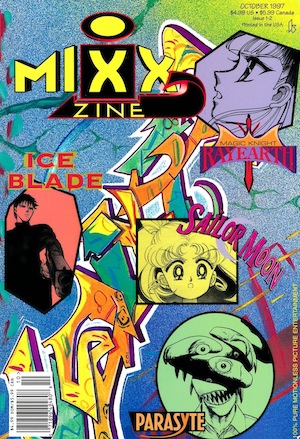
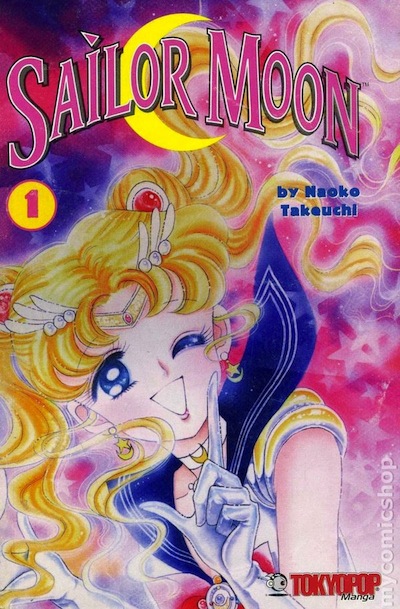
Stu Levy, the CEO of Tokyopop, is one of the founders of the manga publishing industry in the US and indeed, it’s not too much of a stretch to say that he has had a lasting effect on the entire graphic novel industry. Beginning as Mixx in 1997, Tokyopop brought Sailor Moon to America, first in the pages of its MixxZine and then Smile magazine and later as graphic novels. Tokyopop grew rapidly from there and in its heyday was the largest manga publisher in the U.S. Levy helped standardize the manga format and popularize unflipped manga, which Tokyopop billed as “100% Authentic.” Shoujo (girls’) manga helped bring girls and women into the comics world as readers, and the company’s Rising Stars of Manga program and its line of original manga provided an avenue into paying work for many creators.
Tokyopop was ahead of its time in many respects (they were making cell phone manga before smart phones were in widespread use, for example) but the company also suffered a series of setbacks, and it closed its doors as a book publisher in April 2011. Recently it has re-emerged, selling off its backlist and publishing a handful of volumes in print-on-demand format and as e-books.
Many people, myself included, have been critical of Stu and his stewardship of Tokyopop over the years. Nonetheless, his contributions to the world of manga and graphic novels cannot be denied. I asked him to do this interview, which was conducted via e-mail, in order to hear his perspective, and I appreciate his candor in answering some difficult questions.
Brigid: I read in another interview that you didn’t read comics as a child. Is that true, and if so, why did you turn to the medium as an adult?
Stu: I grew up watching cartoons and television, movies, listening to music, reading books, playing video games, and partaking in other geek activities such as D&D, Rubik’s Cube, model trains, and science experiments. But for some reason I was never exposed to comic books. I’m not really sure why—maybe it was just my neighborhood in Los Angeles and that particular era.
Let’s start with Mixx: What inspired you to publish a manga magazine in the U.S.?
In my early 20’s, I went to Japan to study, and became hooked on Japanese culture ever since. While I lived in Japan studying the language, I lived with a Japanese host family. The son and daughter, who were in middle school, watched Dragon Ball Z every night during dinner, and I quickly became hooked. Soon after, a Japanese friend gave me my first manga—Parasyte (Kiseiju). I was skeptical since I had not read Western comics growing up, but as I devoured it, I became addicted. Next I read Slam Dunk and it continued from there. It seemed to be the stories of manga were cinematic with incredible character development, and a few years later when I met Kodansha at a new media trade show in Cannes, I recommended to them developing Parasyte as a feature film. The Kodansha staff and I became good friends and he taught me all the “inner secrets” of Japanese manga, from editorial to marketing. It was from that point on that I came up with the concept of bringing Japanese manga to America, and starting with a magazine that mixed manga titles seemed like a convenient platform to introduce readers to manga.
What was your original plan for it—did you plan to simply keep it a magazine, or were you planning from the beginning to expand in different directions, such as digital publishing?
The goal from the beginning was to create a “mix” (hence the original name “Mixx”)—a mix of stories, a mix of media, and a mix of cultures. That was the company’s vision. It was very natural to develop an online presence from very early in the company, but back then digital publishing outside of a simple website was not an option (no smart phones, no tablets, no e-readers, and not even PDFs!).
From what people tell me, conventional wisdom at the time was “girls don’t read comics.” You published Sailor Moon. How did you get that license, and what made you think it was a good idea?
It was definitely conventional wisdom. Sailor Moon already had a huge following because the anime had been introduced on American television, but the ratings weren’t particularly high so it had been cancelled. A growing base of fans created a mammoth petition asking for it to be returned to television, but when I started the manga business it was off television. I had a very small team at that time and we reviewed Kodansha’s titles. Sailor Moon seemed like a big opportunity, mainly because of its awareness, and our concept of “mix” included different readership demographics. So, we chose two stories aimed more at female readers (Sailor Moon and Magic Knight Rayearth) and two aimed more at male readers (Parasyte and Ice Blade). We were fortunate that Kodansha had not licensed it to their main licensee at the time, Dark Horse, who supposedly had turned it down because of the “conventional wisdom” that girls won’t buy or read comics. When we launched it at our first San Diego Comic-Con—I believe that was 1997—Sailor Moon was a huge hit, and it established us quickly. A few months later, the videos were released and the anime returned to TV at Cartoon Network, where its ratings were pretty good.
Tokyopop pioneered what has become the standard format for manga today—5 x 7 trim size, unflipped, black and white—none of these things were inevitable when publishers first started importing manga to the U.S. I know Viz was toying with it at the same time—why did you decide to go this route, and what do you think made it a success?
By 2000, the business was doing pretty good, but Sailor Moon continued to be our mammoth hit. Other titles struggled, although we did pretty well with Magic Knight Rayearth. One of the challenges was creating awareness for what was still mainly an unknown niche. The term “manga” had not been introduced, and we manga publishers were calling them “comics.” But Western comics were at a low point, and retailers weren’t excited by comics. We were trying to expand our presence in regular bookstores because we felt this was the best way to expose manga to many people who did not read comics or visit comic book stores. The problem, in particular, was that girls at the time did not shop at comic book stores, and they were our largest group of fans thanks to Sailor Moon. Early on, Waldenbooks and Borders supported manga and that is where we sold most of our product. But we wanted to expand with other titles.
I had previously worked in the video game industry, as Japan correspondent for Electronic Gaming Monthly magazine and as a licensee of Sony Playstation. I had also published CD-ROMs in the beginning of my career. And I had seen how CD-ROMs died as a market because the formats were not standardized. Standardization was an effective way of growing a market segment, and branding was the other. I was inspired by Playstation’s approach to 3rd party licenses, requiring consistent branding, packaging and distribution. So, my concept was to apply this approach to manga—to make the format consistent and standardized and to aggressively brand Tokyopop as the main purveyor of great manga. At the same time, we decided to use the Japanese word “manga” instead of “comics” to differentiate. No one had ever done that before. Finally, I had observed “right-to-left” work in Korea and Germany, which convinced me to give it a shot in the US. Retailers were against it, but the Japanese licensors and artists very much preferred not “flipping” the reading to Western style. Combining the format and branding strategy with the “right-to-left,” authentic reading style was our big launch in 2000. Honestly, we gambled the entire company on this and did not “test” the product since I believed such tests wouldn’t work—it was all or none. We launched with 9 titles, which was an unheard of number of titles at the time, and we used in-store displays which was also non-existent in graphic novels and rare in books. But it worked! In fact, at our peak, many people assumed that all manga—even big hits published by our competitors—were Tokyopop books. And one of my most cherished contributions personally is bringing an entirely foreign word—manga—to the English language. It’s something I’m quite proud of.
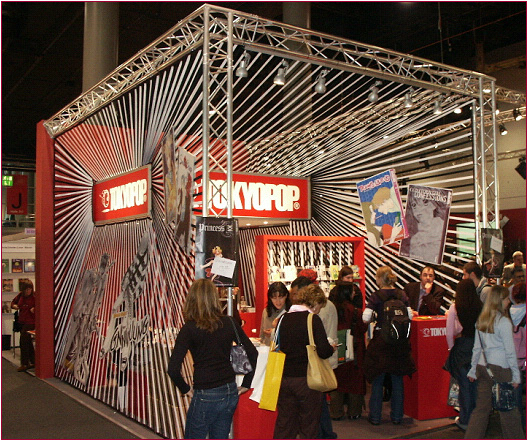
Marketing to teenage girls is very tricky—just ask the Minx folks! Why did Tokyopop succeed at this?
I don’t think we aimed to market at girls per-se. We had a very strong weapon with Sailor Moon and expanded that by bringing a number of compelling shojo titles to market, including of course the mega-hit Fruits Basket. It was really the amazing content that built up the teenage girl market—and our ability to make it easily accessible.
Why did you think it was important to establish an OEL manga program?
While the licensed manga business was doing well, it wasn’t entirely satisfying for a couple of main reasons, which led to my decision to invest significant capital into our original manga program. The main reason was creative—there is only a certain amount of satisfaction from adapting existing stories into English. It’s certainly enjoyable, but for those of us who have a passion for storytelling, it doesn’t completely satisfy. Actually creating stories from scratch is much more creatively rewarding, although it is also a much more difficult business model. But I firmly believed that manga would inspire talented artists and storytellers to hone their craft if we could provide an outlet and platform for them financially. That was my goal. I saw it work in Korea, and to a lesser degree, in Taiwan and Europe. Because I was not clued into the Western comics world, I wasn’t aware of the talented storytellers published on that side of the aisle. Manga and Western comics have some key differences as a reading experience and it was difficult for me to enjoy Western comics since I was so used to manga. The biggest challenge though was finding artists that were not only talented enough to draw at the Japanese quality level, but to do so for an entire graphic novel in a relatively quick period of time. The Japanese weekly and monthly magazine market’s prevalence over decades had trained a mentoring system where artists could start learning while children and the top could eventually become professional and earn substantial income. That farm team of thousands or more, leading to a few dozen stars, had not existed in the US for a few decades. I’m quite proud of the original titles we published, which launched many creators’ careers as writers and artists, as well as offered a unique and exciting opportunity to existing writers and artists. Originally I believed that it would take 5 years to truly develop a crop of top-tier talent but unfortunately the market crash and financial woes of 2008 hit us before we could make it to five years. Looking back, I believe we rushed too many titles to market in too quick of a period. It would have been better to spend time on each title and build up the program less aggressively. But I knew we were also “racing against the clock” since manga publishers (especially us and Viz) were absorbing years of top manga titles from Japan and translating them into English so quickly. I was worried we would run out of titles and be unable to maintain our publishing program, which would have prevented us from maintaining or growing our business. There was a lot of pressure from investors, so growth was the top goal—and I learned that growth has its time and place, but should not be the be-all and end-all in business. Finally, I’d like to add that the term “OEL manga” somehow became established, but I never felt it was the right term for our program since we had original manga titles we created in different languages, including Korean, German, and even Japanese. We would need to call these OKL manga, OGL manga and perhaps OJL manga, and that didn’t make sense to me. We used the term “Global Manga” which may or may not be the best term. I always wished we could simply call it “manga” and people would not distinguish between the ethnicity or national origin of the title. I think there are quite a lot of undiscovered gems in our library and I urge fans to read the titles and support their creators.

What was the inspiration for the Rising Stars of Manga competition?
Rising Stars of Manga’s goal was always very clear—to facilitate the discovery and growth of talented manga creators. In Japan they have various competitions to discover talent, so I utilized their model initially, although publishing an anthology as a graphic novel was unique to our market since we don’t have manga magazines like they do in Japan (which is traditionally where the winners have their works published).
Tokyopop provided an avenue for many veteran and aspiring creators to create a complete manga series and get paid for it. Some of your practices came in for some heavy criticism from other creators, however, with regard to payments, rights, and the terms and even the wording of the contracts. What is your response to that?
Of course I am aware of the negative criticism that various people aimed at our original manga publishing programs. I think it is unfortunate because, frankly, this type of program was very ambitious and unique, and it needed everyone’s support to succeed. I learned the hard way that the comic book creative community in the West has a tendency to “bite the hand that feeds it,” which I do not perceive as healthy. We were very transparent with our approach: if you have an idea and pitch it to us, and together we team up to bring it to market, we both share the rewards of its success. Tokyopop would finance, develop, produce, market, and distribute the title, and the creator would write and/or draw it. We would co-own the copyrights and split up the profits, if the title became profitable. That was our business model, and I stand by it. It’s perfectly legitimate for a creator to keep one’s copyright, but when someone is willing to contribute significant value, they are going to want consideration in return. Each company has its own business model, and in our case we thought it would be fair to share. I always have felt that if terms of a contract are not attractive to you, don’t sign the contract. We always explained our intentions and worked very closely with the creators to discuss their contracts. Then it was their decision whether or not to accept our terms. It was entirely up to them, of course. Over the years, I receive emails from creators who tell me Tokyopop was more fair and transparent with them than any other publisher they’ve worked with, which makes me proud. I do think that when we released the titles, we put quite a lot of effort into marketing them, but the fanbase was not ready for these “OEL” titles so we lost a significant amount of money to build up the program. I did think it would take time, but the initial push-back of some fans who would not accept non-Japanese titles was disappointing. I’m pleased to see that the market and fandom has now moved beyond that—it seems that people are a lot more accepting of original manga titles, which is healthy. Ultimately, only a few titles hit, whether or not they originate from Japan or elsewhere. Our “OEL” program featured a very talented group of creators, and I wish I had the resources to continue that program even today.
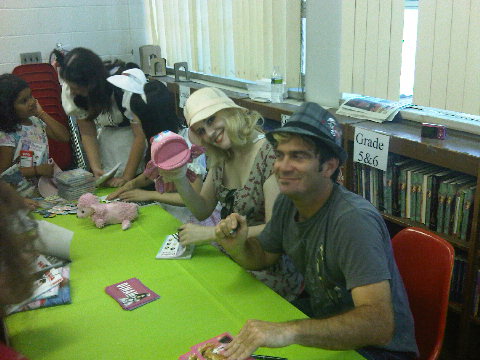
One thing that was notable from the beginning was that Tokyopop did a lot of experimenting with new media such as cell phone manga and limited animation. Why did you do that, rather than sticking with printed books? What were the upside and the downside?
I never formed the company as a pure book publisher, and none of our investors ever invested in the company for it to be such. I have been involved in various aspects of media, especially digital media, from the beginning of my career, and I’m very much a believer in technology and the evolution of media. Those experiments were the right moves to make—I think we were just too early.
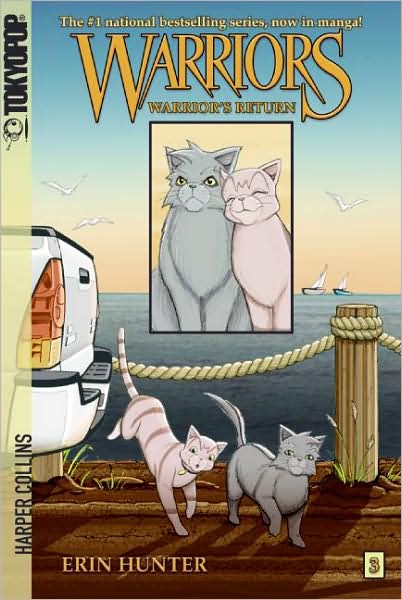
Your partnership with HarperCollins led to one of your most successful non-Japanese titles, the Warriors books, as well as some books that didn’t do so well. What effect did the partnership have on Tokyopop in the long run?
It was a profitable and successful partnership, and I think we established a market for adapting fiction into graphic novels.
The BLU manga line was popular with readers, but at first it seemed almost not to be associated with Tokyopop. How did it come about, and why did you keep it so separate from your main line?
We separated it so that we could publish explicit titles without associating the main Tokyopop brand with those titles. We were a Disney licensee at that time, as well as publisher of family and children’s titles, and the explicit BLU titles were not appropriate for the same brand.
In 2008, Tokyopop split into two different companies, one that would do publishing, one that would handle other media. What did that accomplish?
The main goal was to focus our resources on each of those two main endeavors. Ultimately, my plan was to raise money for the Tokyopop Media company, but the timing did not work out since the market crashed shortly thereafter.
At the same time, you cut back on the number of books published (and laid off some editorial staff). Why did you feel that was necessary?
2008 was a terrible time for our company when the financial and retail markets crashed, from the Lehman Shock and sub-prime mortgage crisis that led to the Great Recession. As a small, independent company that subsisted from its own cash flow, we were hit very hard. Product returns alone approached 80% during 2008, and we were unable to sustain a large staff of 90 people and a large office. We had no choice financially but to do significant cost reductions, including a major layoff—that was the only way to stay in business. It was the most upsetting day of my life.
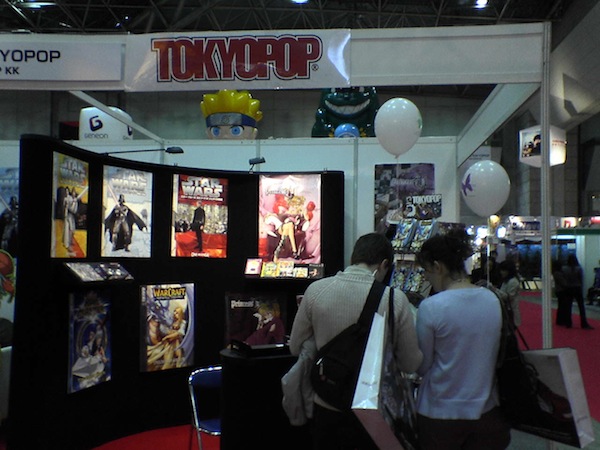
When did you learn that Kodansha was going to stop licensing manga to Tokyopop, and what was the effect on the company?
It was a process but the first major problem occurred in 2006, maybe 2005. I first learned that Kodasha did a deal with Random House by reading it online—I had not heard about it directly from them. We were publishing Love Hina, Chobits and a number of major hits, and we did a wonderful job with those titles. We edited them and marketed them well, growing the market materially. But Kodansha told me they felt Random House could expand the market. Initially, they explored acquiring our company together with Random House, but ultimately Random House decided they could publish internally at Del Rey without buying Tokyopop. So, all the key titles at the time—Negima, Ken Akamatsu’s follow-up to Love Hina; Tsubasa and XXXHolic, CLAMP’s follow-up titles to Chobits—were given to Del Rey. It crushed us. Losing Kodansha was probably the most devastating factor that hurt our business.
Overall, what were Tokyopop’s strongest sellers?
Fruits Basket was absolutely the top series. We sold more of that series in the US market per capita of manga readers then Hakusensha did in Japan. It was unbelievable, considering it wasn’t a TV anime. After that, Sailor Moon, Chobits, and Love Hina, along with GTO and Magic Knight Rayearth were huge. For our original titles, Princess Ai was #1 on Bookscan, and together with Dramacon, Bizenghast, and I Luv Halloween was our most successful series.
What books do you wish you had never licensed?
There were some Cine-Manga that we did which cost a lot of money for licensees and bombed at retail. They weren’t aimed at manga fans, but mainly children and families. Our NBA license was probably the most glaring example, but Shrek and even Family Guy performed poorly. Timing was difficult with Cine-Manga. I think both Shrek and Family Guy—even the NBA—could have been very successful if we had nailed the timing and format.
Here’s the big question: What were the factors that led to the demise of Tokyopop as we know it? Since Tokyopop was two different companies at that point, and you were on the media side, how involved were you in the decision to shut down publishing?
I was very involved in the publishing side, especially at that time. After all, Tokyopop is my baby, and as founder, chairman and shareholder, I have the responsibility for critical decisions, especially since we’re a small company. It’s actually in some ways an easy question and in other ways very complicated. I list the main factors, which are a combination of external, market factors and internal, management factors, as being as follows:
(1) Decline of the manga segment overall—the biggest factor here was piracy. Piracy disrupted this business. I realized how critical that factor was through Gakuen Alice. This is a very entertaining shojo series that we had big hopes for. When we released it, we sold barely anything, maybe a few thousand units. This should have been the next Fruits Basket. I wondered if we could have been wrong about the title itself and perhaps it just didn’t work in North America. But we noticed that it was in the Top 5 on OneManga.com and had been viewed over a million times. That was when I realized we’re screwed.
(2) Book retail problems and the Borders bankruptcy—the book retail problems started in 2008 with significant product returns. It continued over time. Borders was on credit hold with Harper through 2008 and 2009 but they were our #1 customer so it affected our sales materially. This is one key reason we had to downsize—we were selling a lot less product. In 2010, Harper took them off credit limits, and we sold into them as normal. In December 2010, we heard that they hadn’t paid their bill, for the first time ever. That led to their bankruptcy in early 2011, and our write-off of close to $1 million in receivables for products we had already sold. That cash hit, combined with the loss of our #1 customer (1/3 of our sales) put us underwater. At that point, there was nothing to do but throw in the towel for publishing and our US office.
(3) Titles—after losing Kodansha, we had a tougher and tougher time accessing hits from Japan. The big Japanese manga publishers are Shueisha, Shogakukan, and Kodanasha. Viz is owned by the first two, which left Kodansha as our main partner for much of our history. But when they stopped licensing to us, we lost all access to the Top 3. We licensed from Hakusensha and Kadokawa, which are the second tier in Japan, and provided some big hits for us (like Fruits Basket) but we were not exclusive with either of them and the titles were spread out amongst a number of licensees. It was very difficult to build a strong line-up of licensed titles, especially trying to maintain the high overhead we had. And original titles were not yet contributing to the bottom line—in fact, they were in the red. Cine-Manga helped for awhile, Harper’s YA novel adaptations helped, and so did certain original adaptations such as Warcraft. But the Japanese licenses were always our “bread and butter” and not having access to a strong line-up was a problem that affected us over a few years.
I’d like to add that there is a misconception some people have that if we had not pursued film and television projects, or if we had been more proactive in ebooks, we could have saved the company. Just to make it clear, that was definitely not the case. On the film and television side, we did not spend any significant sums of money, and in fact deals like Priest were income-generators since we were paid fees. Regarding ebooks, we wanted to be more aggressive, but most Japanese licensors were holding back those rights as they worked on their digital strategies, which prevented us from offering a legitimate alternative to piracy.
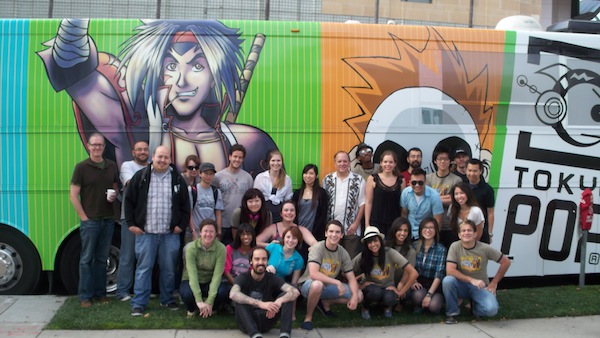
What is the status of Tokyopop now: Is the publishing arm of the company bankrupt or still in existence?
Fortunately, Tokyopop has never been bankrupt or put into receivership. We simply wound down our publishing operations.
And what about the media part?
Tokyopop Media still exists and has a slate of film/television projects that I’m developing as producer.
Recently, Tokoypop partnered with RightStuf to publish some print-on-demand volumes. What part do you play in that, and why did you decide to return to print publishing?
I worked with RightStuf to set this up, so we can offer our titles to customers. Of course, we focus only on the titles we still have the rights to publish, and we have not gone back into retail, but have focused on POD. I would love to bring the rest of all our series to market, but unfortunately I do not have the legal ability to do so. Also, I think the business model has changed significantly and I’m not sure how to succeed as an independent publisher. I’m watching other companies and how they are approaching their businesses.
Are you actively seeking the license for vols. 4 and 5 of Hetalia?
I am working with Gentosha to bring those volumes to market so fans can complete their collections. I have faith that Gentosha will allow me to facilitate this, hopefully soon.
Where do you see Tokyopop going from here?
Tokyopop made a strong impression on the pop culture landscape of America and of course touched the lives of many fans. My goal is to keep that legacy alive and to evolve it to a business model that makes sense in our increasingly digital world. Knowing my personality, that means I will experiment even more and hopefully find the right formula for Tokyopop’s next stage.
The day before the news of the closure hit, you Tweeted
“Wow #GDC2011 is blowing my mind. Why have I been stuck in such an old-school, out-of-touch industry for so long?! (yes I mean books!)”
A lot of people (myself included) criticized you for that. Why did you feel that way? Do you still feel that way?
I wish that was the only thing people criticized me for over the years! Certain people online love to express their “passion” towards me in creative ways—it’s always so amusing. But I understand how that Tweet upset people. Expressing the nuances of complicated thoughts in a Tweet is not something I had mastered at the time (and still don’t feel comfortable doing). The book industry that I experienced over the years never knew how much product was really sold, let alone to whom that product was sold. Inventory sat in retailer warehouses and on shelves that was returned to publishers many years later. The systems used to quantify information were archaic. The inefficiencies were considerable—and that is why Amazon, which never had those problems, has grown while book retail chains have shrunk. Mind you, I’m not referring to independent retailers who run their business out of passion and love for the product. Those businesses remain healthy, but they are a limited few. I was attending GDC for the first time—to see if there were potential investors that could help finance Tokyopop if Borders filed for bankruptcy (which had not been announced at that point)—and I was shocked to see the level of quantitative details that the social gaming companies had access to. They knew exactly who purchased what and when and adjusted their offerings based on that information—on a daily basis. They were virtual so there were no inventory problems either. This highly efficient business model was a stark contrast to the arcane business model of book retail that was collapsing around me. I was exasperated by that incredible difference, and that was what my Tweet meant. So, to answer your question, I still feel that book retail is archaic compared to social gaming, and I wish that there had been an efficient way to bring Asian pop culture including of course manga to fans so that Tokyopop could have kept its staff and office. Of course I wish I had worded my Tweet in a way that would have clarified this—or blogged it instead so I could have written out the nuances.
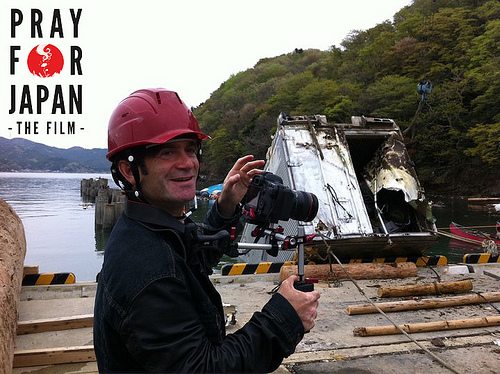
Shortly after that, you were in Japan at the time of the earthquake and were involved in some of the relief efforts. You made a film about the quake and its aftermath. How did these experiences affect you?
I had flown to Japan on March 9, 2011, to let our Japanese licensors know that we had to shut down our publishing operations. Two days later, the earthquake hit. I was on the 49th floor and the building shook like a boat in a storm. I watched the tsunami destroy the shore up in Tohoku, where I had been previously on holiday, and I couldn’t believe it. Immediately after the earthquake, all the companies were closed, so I decided to try to be of some use, which led to my volunteer relief excursions to Tohoku. Ultimately, when local volunteers learned I am a filmmaker, they asked if I would film their story. That seemed like a meaningful way to give back to the culture I had cherished throughout my adult life. Spending time with the victims and other volunteers taught me that life truly is precious and the people you love are more important than anything else. It gave me great perspective which I feel lucky to have received.
Given the opportunity, what would you do differently and what would you do exactly the same way?
Certainly I have my regrets, but my personal philosophy is not one to question the past, only to learn from it. If I was in the exact same situation as times in my past, but with my current level of knowledge and experience, my decision-making process would naturally differ. If the question means how will I apply what I have learned to my decisions in the future, that could be its own interview. But I’d sum it up by saying I put more emphasis nowadays on what matters to me as a person holistically. For a lot of my career, business was my main focus, but that’s not the case now. Business is fascinating and at some point it may become my top priority again, but right now I live a balanced life and enjoy that approach much more.
Do you still read manga?
It’s pretty rare nowadays. I have a range of personal interests and have read piles and piles of manga over the years. But sometimes when a hobby becomes your job for a long time, it’s not as fun as it used to be. Musicians tell me that a lot. But there’s nothing quite like curling up with a truly engaging manga.
What do you see as the long-term impact of Tokyopop on the American comics market?
My understanding is that Tokyopop played a major role in popularizing sequential art in North America. Former president of DC Comics Paul Levitz once thanked me for revitalizing the market for comics in America. Even though our main business was English-language adaptations of Japanese manga, we published original manga and graphic novels, Cine-Manga, YA novel adaptations, film and television adaptations, art books, “light novels,” and experimented with mobile, web, social media, along with e-commerce, television, film, DVDs, online video, and merchandise. But I’m most proud of playing a key role in bringing another culture, especially one as fascinating and sophisticated as Japanese culture, into mainstream American culture.
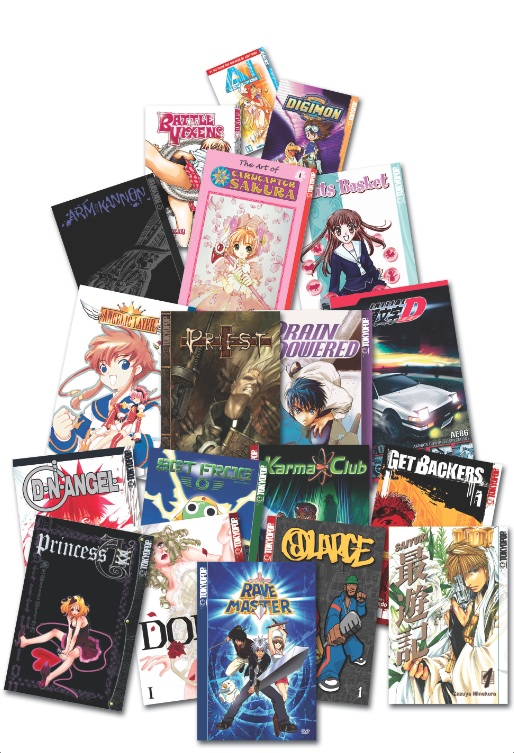
(All photos are courtesy of Stu Levy.)